checklist
What is the right cancellation and late arrival policy when a reformer sits empty for the hour?
An empty reformer is unrecoverable revenue, but a harsh fee costs you clients. A clause by clause checklist for a cancellation policy that is enforceable and actually enforced.
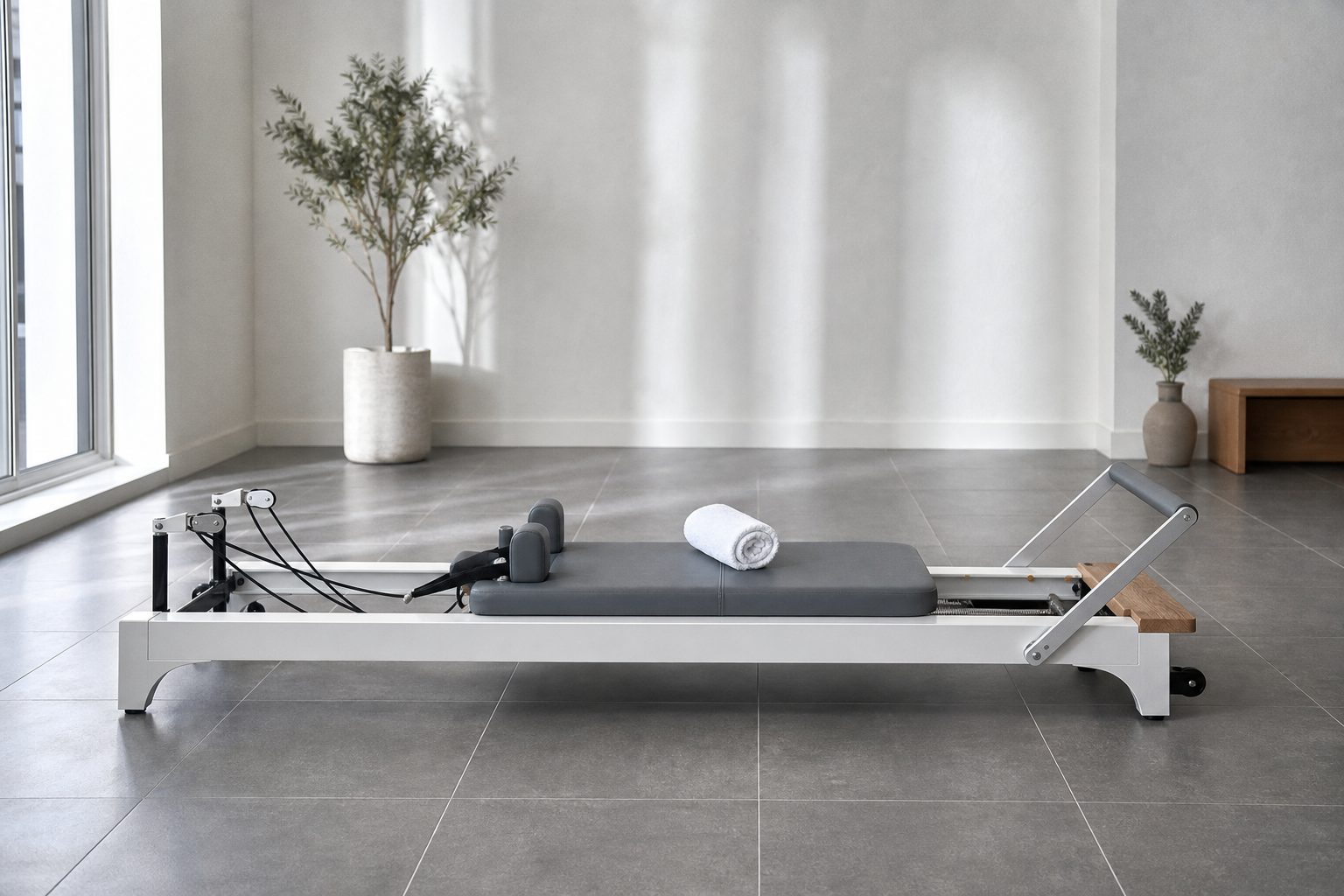
For a studio where equipment sets the ceiling on attendance, the workable answer is usually a twelve hour cancellation window, a penalty matched to what the client bought rather than a single flat fee, and a late arrival cutoff at roughly the ten minute mark tied to footwork and spring setup. Everything else is enforcement.
The window matters more than the fee. A fee recovers a fraction of the seat. A window long enough for your waitlist to actually promote someone recovers the whole seat and gains you a client who got into a class she wanted.
What follows is a clause by clause checklist. Work through it in order, write the language as you go, and pay particular attention to the last two sections, because a policy nobody enforces is worse than no policy: it teaches your regulars that the rules are negotiable and teaches your front desk that they are on their own.
Choosing a window that gives a waitlist real time to fill
Set the window by asking a single question: how long does a person on my waitlist need to rearrange her day and get here?
Two hours is the most common setting and the least defensible. It is long enough to inconvenience the person canceling and too short for most replacements to act. Twelve hours means an evening class releases seats the night before and a morning class releases them the previous afternoon, when people are still making plans.
Differentiate by time of day rather than using one number everywhere.
| Class time | Suggested window | Why |
|---|---|---|
| 6am to 9am | 12 hours | A replacement must decide the night before |
| 9am to 3pm | 12 hours | Daytime clients plan around fixed commitments |
| 4pm to 8pm | 6 to 8 hours | A morning release still reaches someone at work |
| Private or duet | 24 hours | The slot is dedicated and cannot be resold to a group |
Also decide the reverse rule: how late someone may join. If your waitlist can promote up to fifteen minutes before start and your instructor can absorb a late setup, say so. Many studios quietly stop promoting an hour out and never tell anyone, which wastes seats that a client would happily have taken.
Keep reading: How did one studio owner rebuild her schedule after losing two instructors in the same month?
Fee, class deduction or warning: which penalty fits which plan
One penalty applied to every client is the source of most policy arguments, because the same $20 charge means completely different things to an unlimited member and to someone holding a five class pack.
Match the penalty to what the client purchased.
- Class pack holder. Deduct the class. It is proportionate, obvious and needs no card charge. She bought ten classes and used one.
- Capped or unlimited member. Charge a late cancel fee, because there is no unit to deduct. Set it below your drop in rate, commonly $15 to $20 against a $30 drop in, so it reads as a contribution to the empty seat rather than a fine.
- First time client or intro offer. Warning only, always. Nobody should meet your fee schedule before they have met your instructors.
- No show, meaning no cancellation at all. Treat it more firmly than a late cancel, since the seat was never released and the waitlist never had a chance. A pack holder loses the class, a member pays the fee, and a repeated pattern triggers a conversation.
A forgiveness allowance in writing
Give every client one waived late cancel per rolling quarter, applied automatically and visible in her account. This single clause removes the majority of front desk disputes, because the first offense resolves itself without anyone having to make a judgment call. The second one is then genuinely enforceable, and everyone knows it.
Late arrival cutoffs and the safety reason behind them
A late arrival policy is not about tidiness. On a reformer it is about load.
The first several minutes of a group reformer class are where the instructor confirms spring settings, adjusts footbar height and headrest, checks for anything that changed since last week, and cues the client through footwork that warms the hips, ankles and spine before any loaded or unsupported work begins. A client who walks in at minute twelve and gets on a carriage set for someone else's body, cold, into an exercise mid sequence, is the injury you will remember.
Write a cutoff of ten minutes as the default, and give instructors explicit authority to apply it. Then handle the details:
- State whether a client turned away is charged. The consistent answer is yes, treated as a no show, since the seat was held.
- Say whether she may stay and watch or use the mat area instead. Offering an alternative makes the refusal feel like care rather than punishment.
- Note that the instructor may extend the cutoff at her discretion for a class that has not yet moved beyond footwork.
- Ask clients to arrive five to ten minutes early for a first class, and put that in the booking confirmation, not only on the website.
Explain the reason every time you state the rule. Clients accept a safety rule far more readily than a punctuality rule, and in this case the safety framing is the true one.
Keep reading: Is demand for small group reformer classes still growing, or has my local market topped out?
Injury, illness and weather exceptions written in advance
Exceptions decided in the moment become precedent you did not choose. Decide them now, in writing, and the difficult cases mostly handle themselves.
Cover at minimum:
- Illness. You want a sick client to stay home. Waive the fee for illness, and say so plainly, otherwise your policy is actively encouraging someone to bring a virus into a room of shared equipment.
- Injury or medical hold. Define what pauses an account: for example a note from a physician or physical therapist pauses a membership for up to ninety days and extends pack expiration by the same period.
- Pregnancy and postpartum. State the hold terms and any prenatal class options, so nobody has to negotiate this while pregnant.
- Weather and closures. Define who decides, how the decision is communicated, by what time, and what happens to bookings. If you close, no client is penalized and pack classes are restored automatically.
- Instructor absence. Say that classes may be taught by a substitute and that a substitution is not itself grounds for a late cancel waiver, but that clients will be notified as soon as the change is made.
- Bereavement and family emergency. One line granting staff discretion is enough, and it prevents an awkward exchange at the worst possible moment.
Disclosure at purchase so a charge is not a surprise
Nearly every angry chargeback traces back to disclosure rather than to the policy itself. The client is not disputing $18. She is disputing being charged $18 she did not know about.
Build disclosure into four places:
- At purchase. An affirmative checkbox next to a visible summary of the window and the fee, stored with a timestamp, before payment completes. Not a link to terms.
- At booking. One line in the confirmation email stating the exact date and time the free cancellation deadline passes for that specific class.
- At the reminder. A reminder sent before the deadline, not after it, so the client can still act. A reminder that arrives after the window has closed reads as a trap.
- At the charge. An email naming the class, the date, the time she canceled, the deadline she missed and the amount, plus how to raise a question.
Keep the records. If a card issuer asks for evidence, a timestamped acceptance and a booking confirmation showing the deadline usually settle it.
See how ReformerRoster handles this for pilates studios
Front desk and instructor scripts for the difficult conversation
Your staff are not avoiding enforcement because they disagree with the policy. They are avoiding it because nobody has given them the words, and improvising at a busy desk with a line behind you is genuinely unpleasant.
Write three short scripts and rehearse them once.
The late cancel charge
"I do see the late cancel from Tuesday. The window closes twelve hours before because that is what gives the waitlist time to fill the reformer. This one is covered by your quarterly waiver, so there is no charge, and I have noted it on your account."
The late arrival turned away
"We are past footwork, so I am not able to bring you onto a reformer safely today. You are welcome to use the mat space, and I will hold the 6pm on Thursday for you if that helps."
The repeat offender
"You have had four late cancels this quarter, and the 6pm is the class most people are waiting for. Would a standing booking in the 9:30 work better, or should we move you to a pack so you are only paying for what you use?"
Notice that the last one is a scheduling conversation, not a disciplinary one. A client canceling repeatedly from the same slot is telling you that slot does not fit her week.
Reviewing exceptions quarterly so the policy stays real
Set a recurring date each quarter and pull three numbers: total late cancels, total waivers granted, and the number of waitlist promotions that actually converted into attendance.
Read them together. If waivers exceed charges by a wide margin, your policy is decorative and your team has quietly repealed it. If late cancels cluster in one or two slots, you have a schedule problem wearing a policy costume. If promotions rarely convert, your window is too short no matter what the fee is.
Change at most one clause per quarter, announce it two weeks ahead by email, and apply it only to bookings made after the effective date. Retroactive rule changes cost more goodwill than any fee recovers.
Putting it into practice
Draft the seven clauses above in an afternoon, then check that your booking system can actually deliver them: a different window per class time, a penalty that varies by plan type, an automatic quarterly waiver, and disclosure at the moment of purchase.
ReformerRoster is built for exactly this shape of problem. Capacity is tracked per apparatus so a class can never be oversold, released seats promote off the waitlist automatically with a confirmation deadline, and instructor substitutions notify everyone booked without rebuilding the schedule. Set the window that gives your waitlist a fair chance, and let the empty reformer become someone else's class.
Read also

How did one studio owner rebuild her schedule after losing two instructors in the same month?
Two resignations two weeks apart left eleven weekly classes uncovered. A step by step account of the triage, the sub bench that got built, and what the schedule looked like ninety days later.

Is demand for small group reformer classes still growing, or has my local market topped out?
Boutique reformer supply has expanded fast in many US metros. How to read your own catchment area, the signals that a neighborhood is saturated, and where demand is still moving.

What actually happens during a fire marshal or health inspection visit to a Pilates studio?
Occupancy limits, exit paths, sanitizing practice and equipment spacing all come up. A walkthrough of what inspectors look at in a group fitness space and how owners prepare for it.