numbers and benchmarks
How many reformers do I actually need before I can run a profitable group class schedule?
Reformer count sets your ceiling on revenue per hour and your floor on rent and payroll. Here is how to work the arithmetic backward from your lease and your instructor rate.
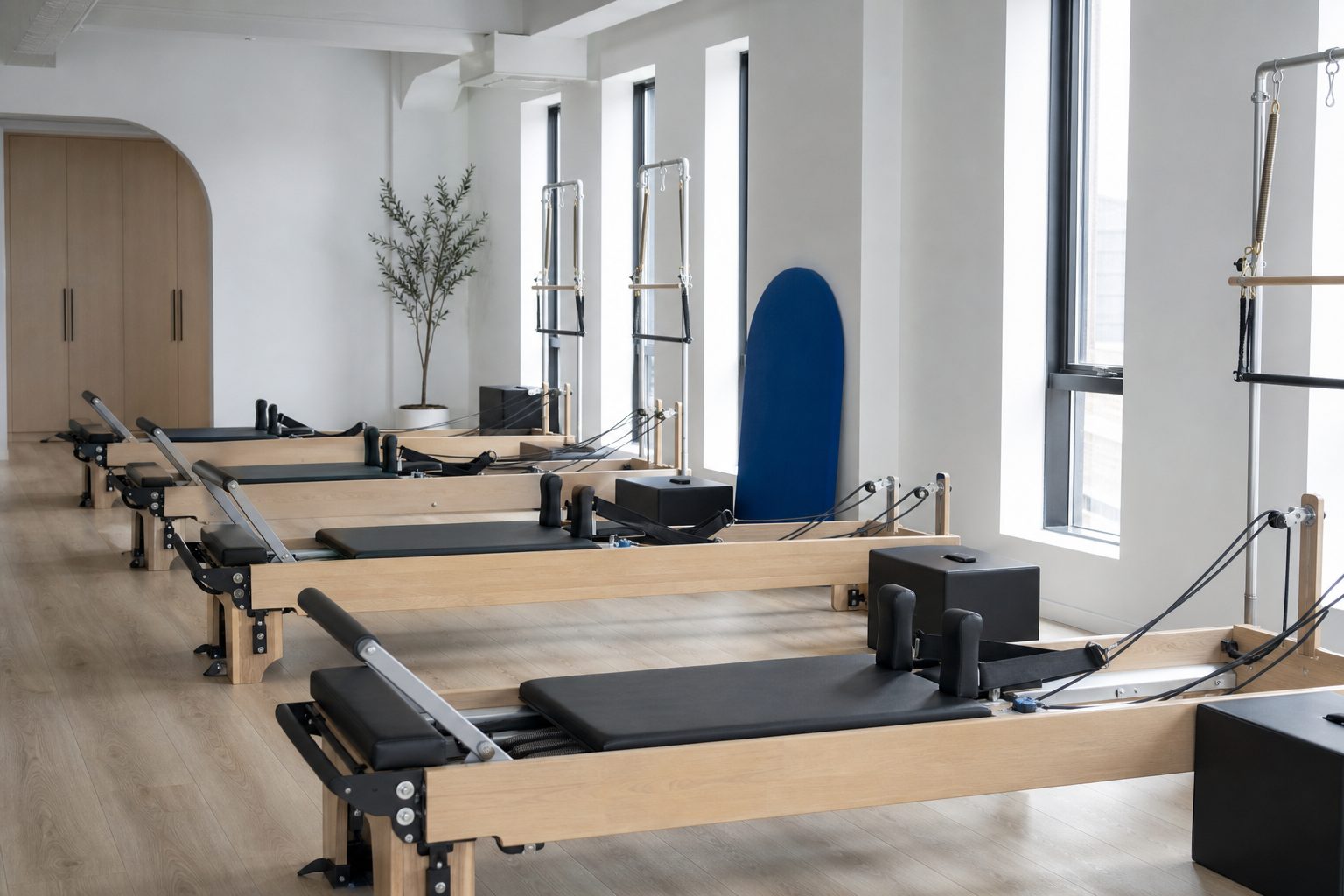
For most US group reformer studios, the honest answer is eight to ten machines. Below six, the arithmetic almost never works unless your rent is unusually cheap or your price is unusually high. Above twelve, you stop being constrained by equipment and start being constrained by instructor quality and by how many bodies you can actually get through the door at 6:15 in the morning.
The reason eight to ten keeps showing up is not taste. It is the point where the revenue a full class produces finally clears the two costs that do not care whether the class is full: the lease and the instructor. Both are fixed per hour. Seats are the only variable you control, and every empty seat is pure margin lost.
So work it backward. Start with what you pay per hour to keep the doors open and the teacher on the floor, then ask how many bodies at your price it takes to cover that, then ask whether you can realistically fill that many at the hours you can sell. What follows is that calculation, laid out so you can put your own numbers in.
Revenue per class hour is seats times price times fill rate
One line governs everything: revenue per class equals machines available, times your effective price per head, times the share of those spots that actually get bodies on them.
The word doing the work is effective. Your drop-in rate is not your effective price. If you sell a ten class pack for $280, your effective price is $28, not the $38 on your rate card. Unlimited members are worse to pin down: take the monthly membership price and divide by the average number of classes that member actually attends. A $199 unlimited member who comes nine times a month is paying you about $22 a head.
Build the blended number honestly. If your attendance splits roughly into thirds across drop-ins at $38, packs at $28 and unlimited at $22, your blended effective price is about $29. That is the figure to use everywhere below, not the rate card.
Fill rate is the second number people flatter. It is not your average across the peak classes you love to talk about. It is total booked spots divided by total offered spots across the entire published schedule, including the Tuesday 1pm and the Sunday 4pm. A studio that runs 90 percent at 6am and 30 percent midday is not a 90 percent studio.
Keep reading: What does my studio owe an instructor who is classified as an employee instead of a contractor?
Square footage each reformer needs once you add safe walking space
A standard commercial reformer is roughly 8 feet long once the footbar and the standing platform are accounted for, and about 2 feet 4 inches wide at the rails. That is under 20 square feet of machine.
The machine footprint is never the number that matters. You need to add:
- Roughly 2 feet between machines so an instructor can get to a client's shoulder rest without climbing over someone.
- Clearance at the foot end for standing work, jumpboard setups and getting on and off, call it 3 feet.
- Clearance at the headrest end for the ropes and for a person to stand behind the machine.
- An aisle wide enough to walk the room mid class without turning sideways.
The working figure most owners land on is 40 to 50 square feet per reformer in the studio room alone. Ten machines therefore wants 400 to 500 square feet of clear floor, before you add a reception area, a bathroom, a changing corner, a prop wall and a mechanical closet. That is why a ten machine studio commonly needs 900 to 1,200 total rentable square feet.
What a reformer costs new, refurbished, and leased
Group studio reformers from the major US commercial brands generally land between roughly $4,000 and $7,000 new, before freight, assembly and tax, with the higher end covering tower or full studio configurations. Freight on a pallet of machines is real money and is quoted separately.
Refurbished machines from a dealer typically run a meaningful discount off new, and the used market from closing studios is cheaper again. The catch with used is that upholstery, ropes, springs and wheels are consumables, and a machine that looks fine can need several hundred dollars of wear parts immediately. Budget for a full refresh kit on anything you buy secondhand and treat that as part of the purchase price.
Leasing turns a large capital number into a monthly one. An equipment lease spread over 36 to 60 months converts a $5,500 machine into a monthly payment, usually with a purchase option at the end. It costs more in total. It is often still the right call, because it lets you open with ten machines instead of six.
Keep reading: How often should reformer springs, ropes and straps be replaced in a busy group studio?
Instructor pay per class does not shrink when seats sit empty
This is the line that ruins small schedules. In most US markets a group reformer instructor is paid a flat class rate, commonly somewhere in the $35 to $60 range depending on the city, sometimes with a per head bonus above a threshold.
That rate is owed for a class of two exactly as it is owed for a class of ten. If you classify your instructors as employees, add employer payroll taxes, workers compensation premium and unemployment insurance on top, which realistically pushes a $45 class rate toward $55 or more in true cost.
Now put it against seats. At a $29 blended price, a class of two produces $58 of revenue. Your instructor cost alone eats essentially all of it, and you have not paid a dollar of rent, insurance, software, laundry or utilities yet. This is why the answer to a chronically empty midday class is usually to cut it, not to market it harder.
Rent per reformer as a monthly test of viability
Here is a fast screen you can run on any lease before you sign it. Take your all in monthly occupancy cost, base rent plus common area charges plus your share of taxes and insurance, and divide it by the number of reformers the space will hold.
Then ask what each machine has to earn. A machine used across a schedule of, say, 40 classes a week is offered about 173 times a month per seat. At a 55 percent fill rate and a $29 blended price, one machine produces roughly $2,760 a month in gross revenue.
Against that, a rent per reformer figure of $250 is comfortable, $400 is workable in a strong market, and $600 means every other number in your business has to be excellent. If the space you are touring puts you above that, the honest fix is usually a different space, not a bigger marketing budget.
See how ReformerRoster handles this for pilates studios
Break-even fill rate at six, eight, ten and twelve machines
Now the piece you can use on its own. Assume, and these are assumptions you should replace with your own figures:
- Blended effective price per head: $29
- Fully loaded instructor cost per class: $55
- Fixed monthly overhead outside instructor pay, meaning rent, insurance, software, utilities, laundry, cleaning and your own base draw: $9,500
- Schedule: 40 classes per week, about 173 per month
Fixed overhead per class is $9,500 divided by 173, or about $55. Add the instructor at $55 and each class on the schedule must produce about $110 to break even. At $29 a head that is 3.8 bodies, call it 4 paying clients in every class.
| Reformers | Seats offered per month | Break-even bodies per class | Break-even fill rate |
|---|---|---|---|
| 6 | 1,038 | 3.8 | 63% |
| 8 | 1,384 | 3.8 | 48% |
| 10 | 1,730 | 3.8 | 38% |
| 12 | 2,076 | 3.8 | 32% |
Read the right hand column carefully. The bodies needed never change, because the cost of running the hour never changes. What changes is how forgiving the schedule is. A six machine studio has to sell nearly two thirds of everything it offers, at every hour, in every season. A ten machine studio breaks even at 38 percent and turns its peak classes into genuine profit.
That gap is the whole argument. Extra machines do not raise your costs much once the room is leased, but they widen the margin between break-even and full.
When adding a machine beats raising the price
Use this rule. Look at the classes that sell out and count how often they hit capacity and turn people away. If more than a quarter of your weekly classes are capping out, you have a capacity problem and another machine is the cheaper fix. If under 15 percent cap out, another machine will sit idle and price or schedule is your real lever.
The arithmetic on one added machine is simple. At $29 blended and 173 offered seats a month, a machine that fills at 55 percent adds about $2,760 in gross revenue. A leased machine might cost $130 a month. The marginal cost of the seat is close to zero because the instructor, the rent and the front desk are already paid. Almost any real utilization pays for it.
Raising price is the better move when your peak is full but your midday is dead. Price does not create midday demand. It just harvests more from the peak you already own. And a $3 increase across a blended $29 is a 10 percent revenue lift with no capital outlay, which is worth doing before you sign a lease amendment.
The failure case for both is the same: selling a spot you do not have. If your booking system counts heads rather than machines, or lets a tower class and a reformer class share a capacity number, you will eventually put eleven people in front of ten carriages on a Saturday morning.
Where the numbers stop being theory
Every figure above depends on knowing your true fill rate per class, per hour, per machine, and on never overselling the apparatus you actually own. That is exactly what ReformerRoster is built for: capacity set per apparatus rather than per room, an automatic waitlist that fills a spot the moment someone cancels, and instructor substitution handled without the schedule breaking.
Put your own price, instructor rate and overhead into the break-even table above. Then look at which classes on your schedule clear four paying bodies. The ones that do not are telling you whether your problem is machines, price, or the hour itself.
Read also

What does my studio owe an instructor who is classified as an employee instead of a contractor?
Fixed schedules, studio scripts and required trainings all push instructors toward employee status. Here is what the classification tests look at and what reclassifying actually costs per class.
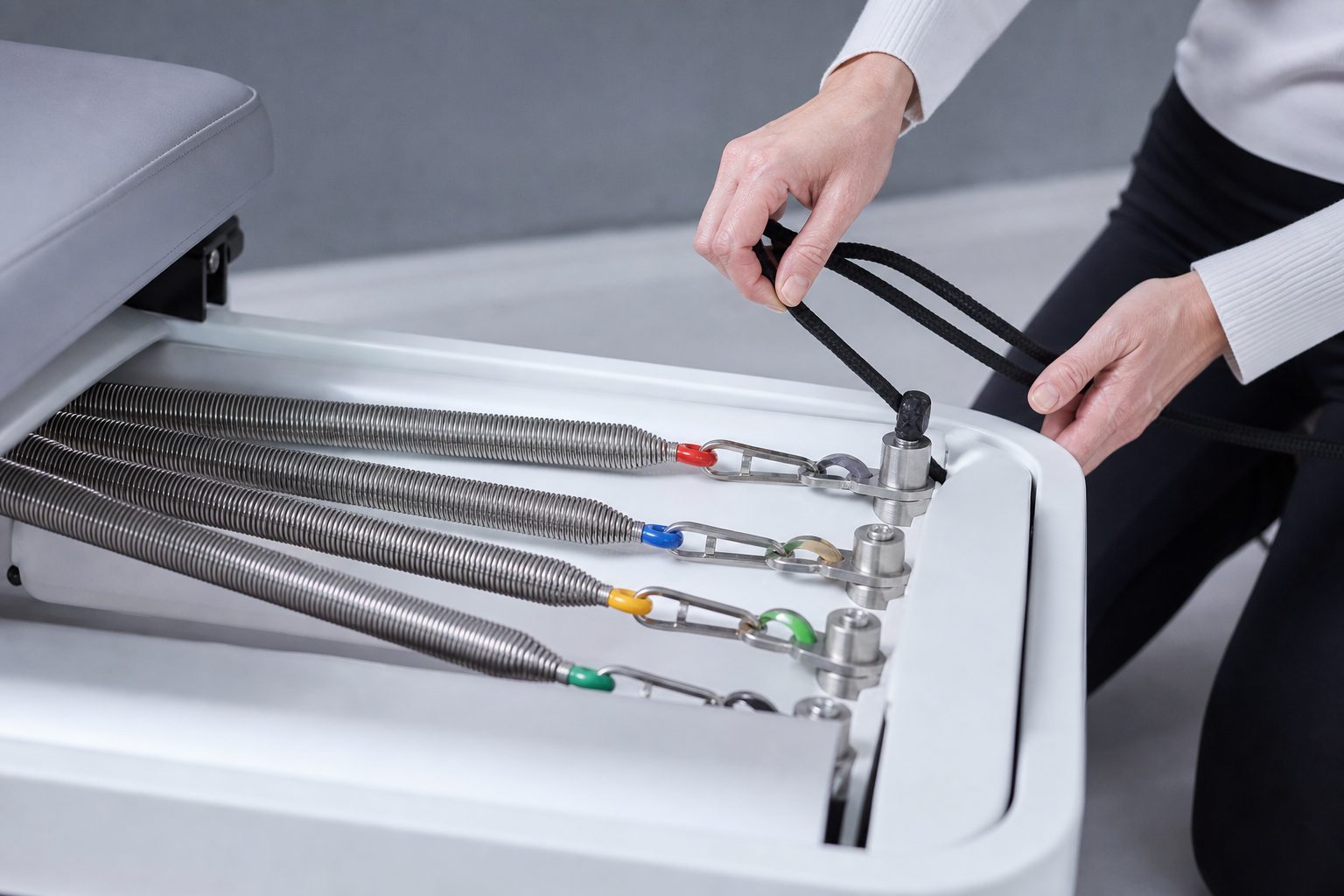
How often should reformer springs, ropes and straps be replaced in a busy group studio?
Springs lose tension, ropes fray from the inside and footbar hardware loosens under group class volume. A concrete inspection rhythm and replacement window for every wear part.

Should I sell class packs, unlimited memberships or a hybrid when my equipment caps attendance?
Unlimited pricing rewards heavy users who crowd out new clients on ten reformers. A side by side look at margin, cash flow, no show behavior and breakage across each model.